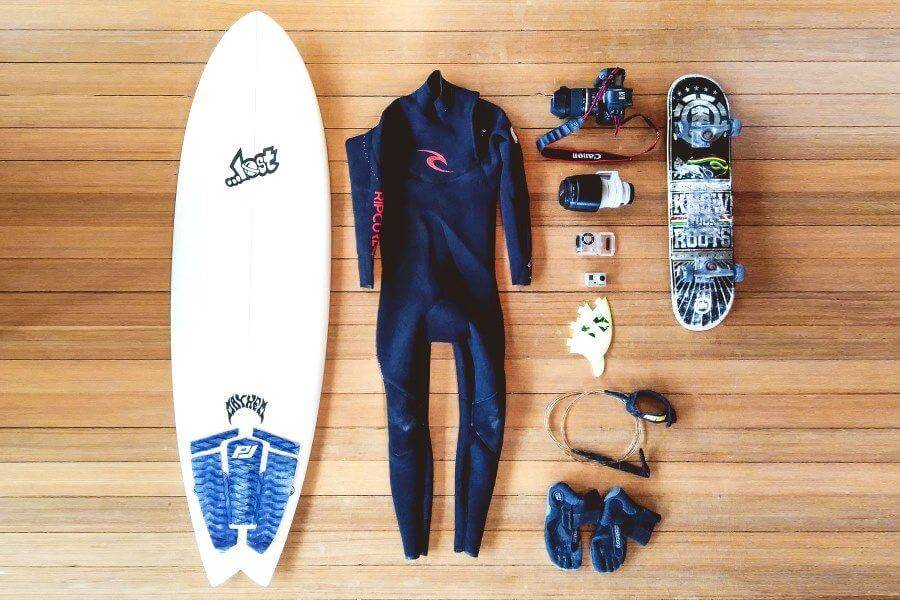
To start surfing, you need a suitable surfboard with compatible fins, a secure leash, grip on the deck, surfwear and sun protection. This surf equipment list separates the essentials from optional accessories, so you can decide what to rent, what to pack and what to leave at home for Bali.
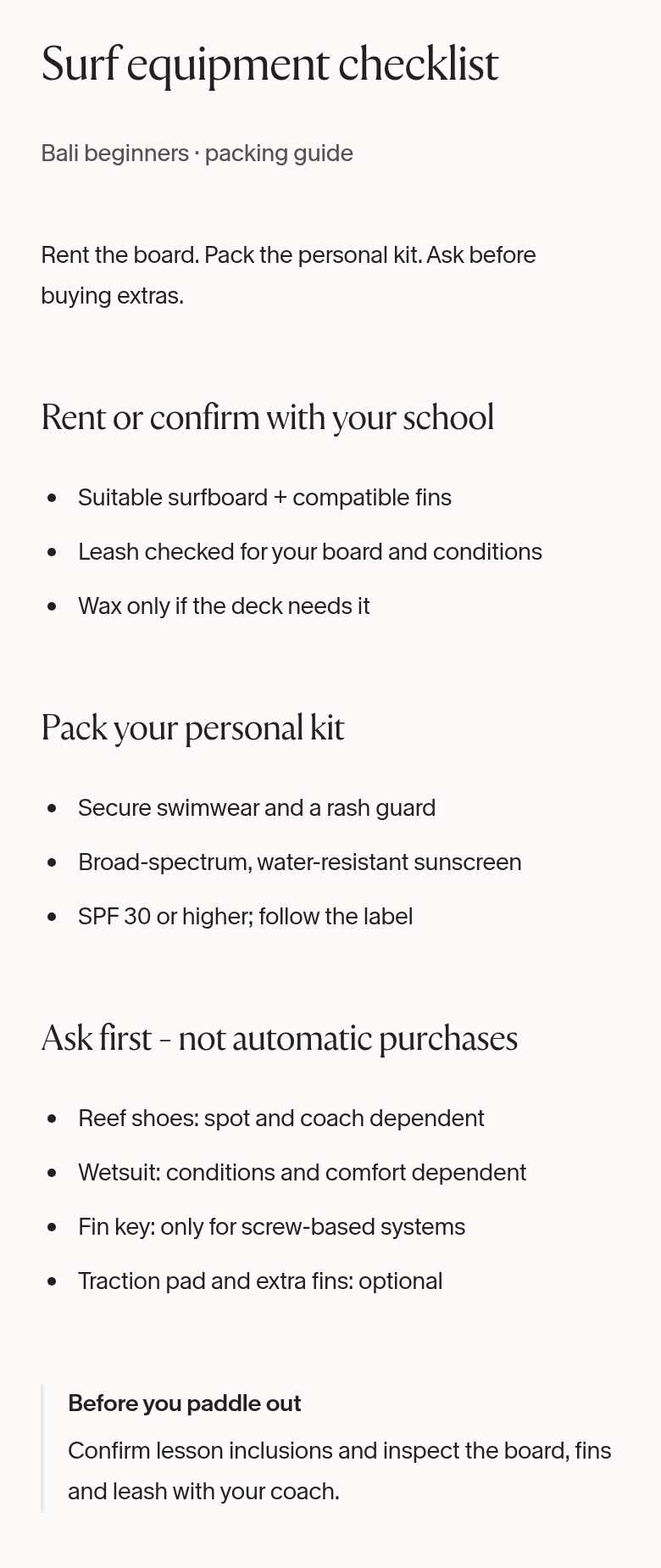
Surf equipment checklist
- Surfboard: Essential | Rent first | Choose with a coach for your size, ability and conditions.
- Fins: Essential | With the board | Use a compatible, secure set.
- Leash: Essential | Rent with board | Check cord, cuff and attachment.
- Wax: Deck-dependent | Buy if needed | Ask which formula suits the board and water.
- Wax comb: Optional | Borrow or buy | For maintaining a waxed deck.
- Traction pad: Optional | Already fitted, if needed | No need to add one to a lesson board.
- Rash guard and secure swimwear: Essential packing | Bring or buy | Check what your lesson supplies first.
- Sunscreen / surf zinc: Essential | Bring or buy | Broad-spectrum, water-resistant SPF 30 or higher.
- Reef shoes: Spot-dependent | Ask before buying | Coach to advise on entry and bottom.
- Wetsuit: Condition-dependent | Ask before packing | Check conditions and comfort.
- Fin key: System-dependent | Borrow or buy | For fin systems that use screws.
The essential kit
Surfboard
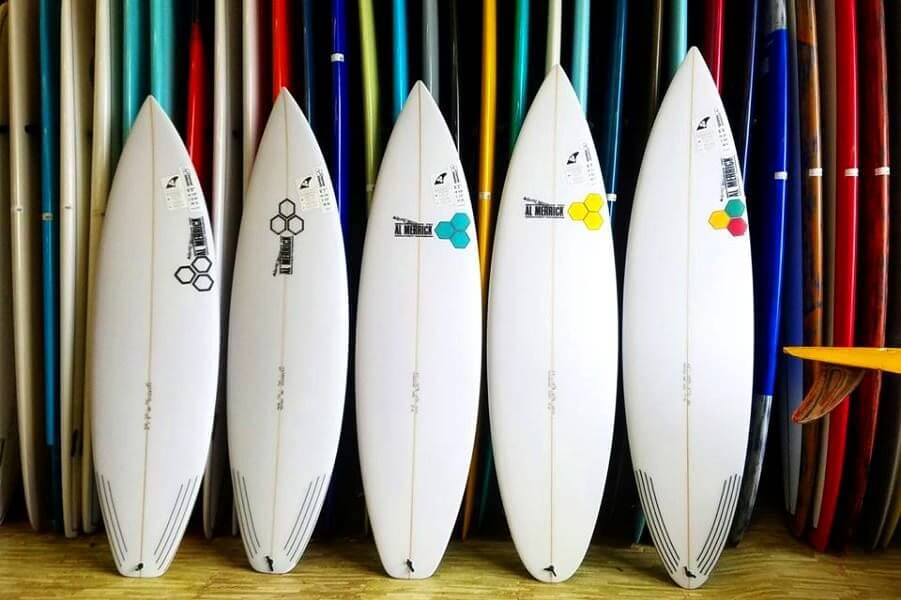
Start with a stable board that suits your body size and experience, rather than choosing by colour or appearance. WaveHouse's Canggu lesson page describes soft-top boards for beginners learning in white water and taking their first unbroken waves.
A soft-top is a starting point, not a reason to rush onto a shortboard. Explore the types of surfboards, then read about choosing a board for your body type before discussing your next step with a coach.
Before taking a rental board out, ask the team to check any visible damage. Our guide to quick board repairs explains common travel dings, but a damaged rental board should go back to the rental team rather than become a DIY project.
Fins and fin key
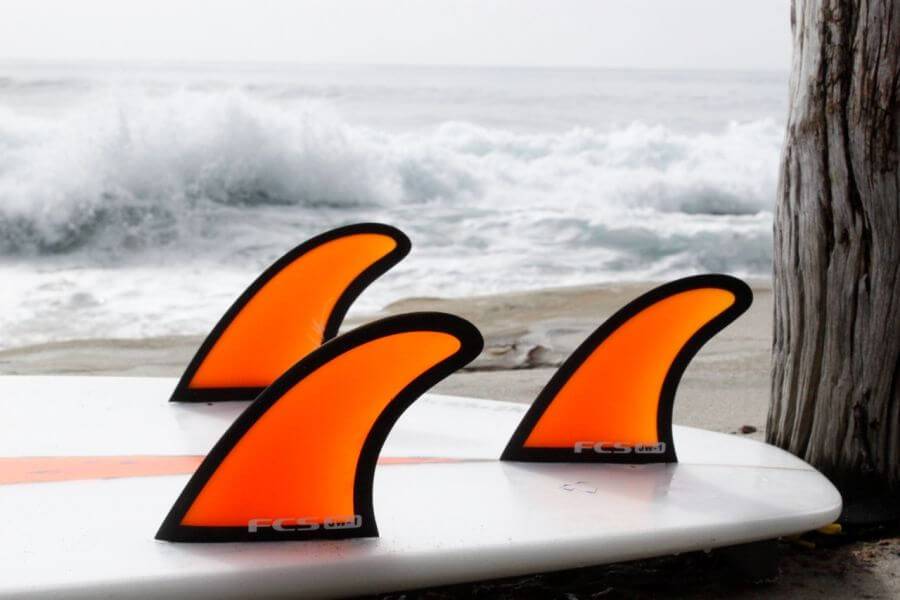
Fins help a board track and turn, but the right set must fit its fin system and suit the surfer. FCS describes flexible Soft Flex fins as suitable for beginners gaining confidence on softboards.
Keep the compatible fins supplied with your lesson or rental board unless the coach recommends a change. A fin key is for systems with screws; genuine FCS II fins can be installed without a key, so do not assume every board needs one.
- compatible softboard fins: keep the supplied beginner set
- screw-based system: matching fin key
- genuine FCS II: no key required
Leash
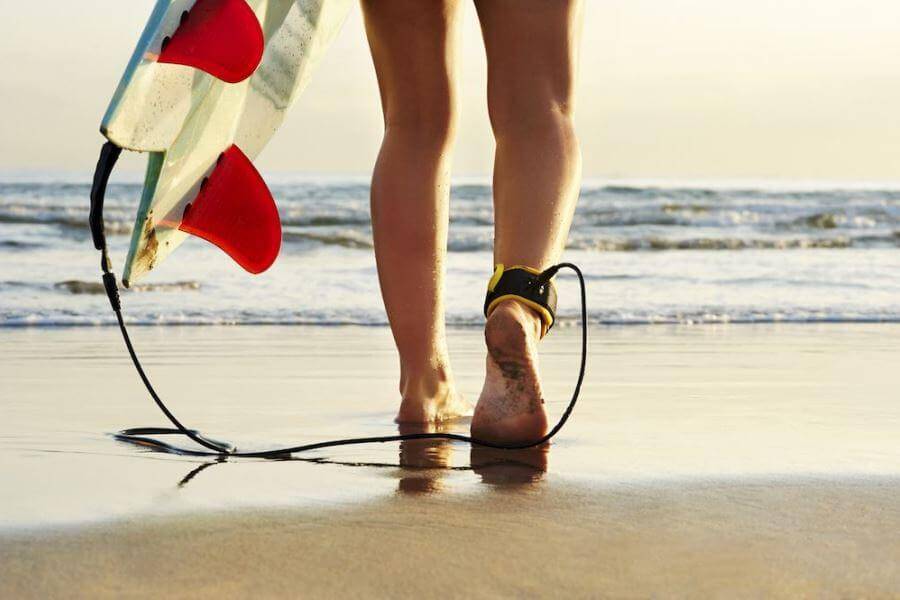
Choose a leash suited to your board length and the conditions. Creatures of Leisure recommends a leash about the same length as the board, or the next size up when the board falls between sizes, rather than a fixed extra 50 to 60 cm.
Before each session, check the cord, cuff, fastenings and board attachment with the rental team or coach. Replace damaged equipment before entering the water, and do not treat a leash as a substitute for swimming ability or surf supervision.
Wax and wax comb
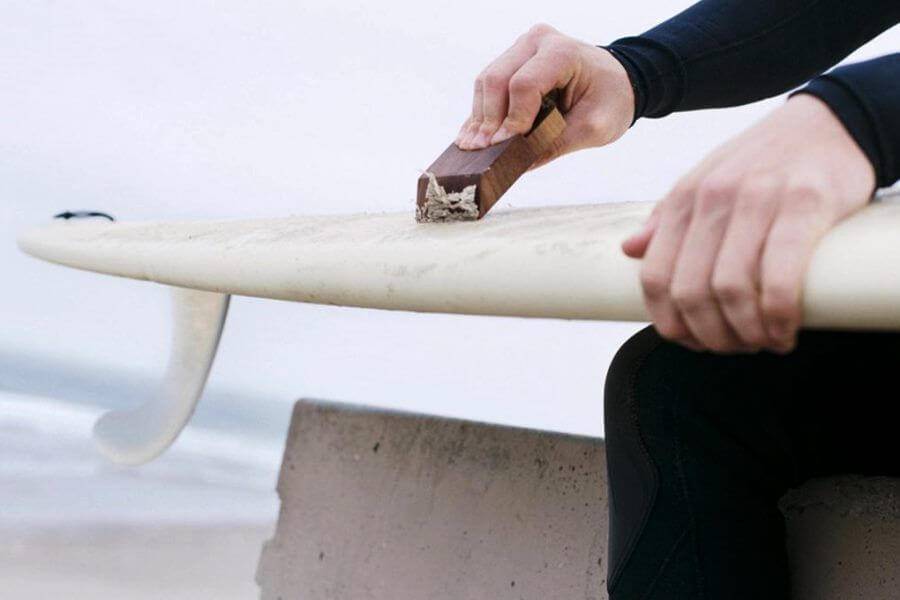
Wax provides grip on a board that needs a waxed deck. Ask the rental team before adding wax to a soft-top or a board that already has a suitable grip surface.
Choose the formula using the manufacturer's water-temperature label, not a generic chart. For example, Sexwax Quick Humps 6X is labelled for tropical water at 26°C and above; its guide also explains when a harder basecoat and softer topcoat may be useful.
A wax comb helps refresh the texture of existing wax. Read how to wax a surfboard for the application steps, and have the coach confirm the formula for your Bali session.
- wax formula: follow manufacturer label
- basecoat: follow product method, not automatically mandatory
- wax comb: optional texture maintenance
Traction pad
A traction pad, also called a tail pad, is a grip pad fixed near the tail of some boards. It is an optional accessory, not something every beginner needs to add to a lesson board.
Use the board as supplied and ask before changing its grip setup. Buying a pad can wait until you know which board and stance suit you.
What to wear
Rash guard and boardshorts
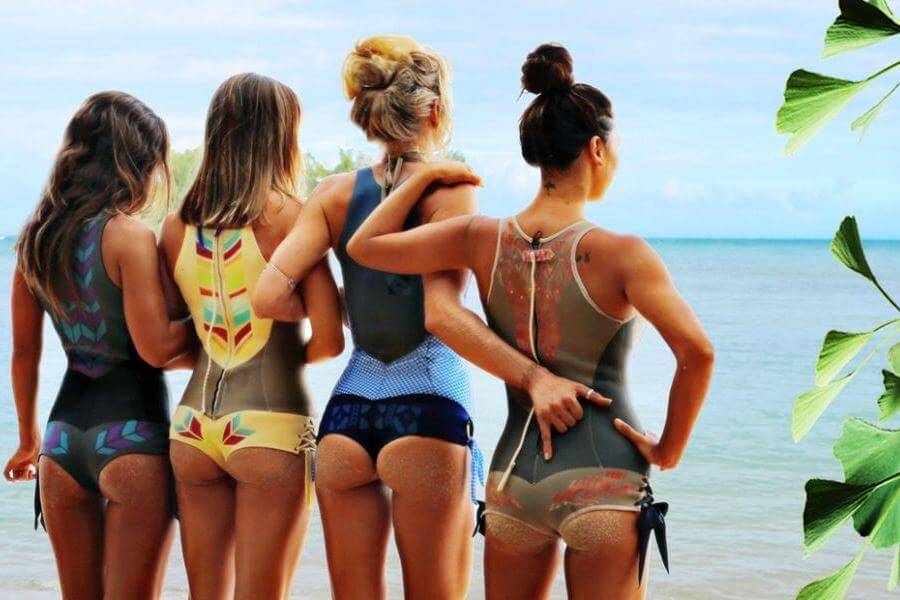
Choose a comfortable rash guard and swimwear that stay in place while paddling, standing up and falling into the water. Boardshorts, swim shorts or a secure surf swimsuit can work; fit and coverage matter more than style.
For sun protection, choose clothing labelled for that purpose and still apply sunscreen to exposed skin. A close, comfortable fit can also limit rubbing; read our guide to prevent surf rash for more on clothing and chafing.
Reef shoes
Reef shoes belong on a spot-specific checklist, not every beginner's shopping list. Ask your coach whether footwear is suitable for the bottom, entry and conditions at the chosen break.
Do not use shoes as a reason to walk on reef or enter a break beyond your ability. Echo Beach and Pererenan have reef hazards, so ask your coach about footwear for the chosen spot and entry.
Do you need a wetsuit in Bali?
WaveHouse's FAQ says Bali's tropical climate usually makes wetsuits unnecessary. Rash guards are recommended for sun protection and are provided. Your comfort still matters: ask your coach about extra warmth if you feel cold or plan a longer session.
Sun protection

Choose a broad-spectrum, water-resistant sunscreen with SPF 30 or higher for skin not covered by clothing. Reapply according to its label, after swimming or towelling off, and about every two hours outdoors; water resistance is not a promise of all-session protection. If you prefer surf zinc for your face, check its protection and reapplication instructions rather than assuming it lasts longer than other sunscreen.
Rent or buy in Canggu
For a first lesson or short trip, renting a suitable board with compatible fins and a checked leash is a practical way to avoid buying the wrong setup. Confirm what the rental includes and what happens if the board is damaged before accepting it.
Bring or buy your own well-fitting surfwear and sun protection. Buy wax only if your board needs it, and leave fin upgrades and a traction pad until you understand your equipment.
WaveHouse's Canggu lesson page states that surfboards and rashguards are provided for every session as part of your package. Its FAQ also lists surfwear and zinc among the items provided. Check your chosen package for the full inclusions and any optional add-ons; do not assume every accessory is included.
For budgeting, see what gear costs in Bali, then confirm current prices with the provider. Prices are not repeated here because they can change.
What to skip
Skip a performance shortboard, extra fin sets and a new traction pad until a coach has helped you choose a suitable board. Do not buy accessories simply because experienced surfers use them.
Leave a fin key off your shopping list if your board's system does not need one. Do not pack a heavy wetsuit or buy reef shoes on assumption alone; check your planned sessions first.
If you are renting, you can also avoid travelling with a board bag for this trip. Keep the packing list focused on clothing, sun protection and any personal items your school asks you to bring.
FAQ
What equipment do I need to start surfing?
Start with a suitable surfboard, compatible fins, a checked leash and grip appropriate to the deck. Add secure swimwear, a rash guard and water-resistant sun protection. For a first lesson, ask the school what it supplies before buying a board, wax, a traction pad or spare fins.
Do I need a wetsuit in Bali?
Bali's tropical climate usually makes wetsuits unnecessary, according to WaveHouse's FAQ. A rash guard and secure swimwear are the usual starting point. If you feel the cold or plan a long session, ask your coach about the conditions on your dates before packing extra warmth.
Should I rent or buy a surfboard?
Renting first lets you try a board suited to your size and ability without committing to a purchase. Check the board, fins and leash with the provider, and confirm damage terms. Consider buying once you know what works for you and expect to surf regularly.
Which fins suit a beginner?
Use fins compatible with the board and recommended by the coach or rental team. FCS identifies flexible Soft Flex fins as suitable for beginners on softboards. Do not buy an advanced fin set first: the board, your size and the conditions matter more than copying another surfer's setup.
Not sure which surf equipment suits your first session? Explore beginner surf lessons in Canggu and ask WaveHouse which board, leash and surfwear are provided for your chosen lesson before you pack.
Updated 9 October 2026. For lesson inclusions and packing advice, see the WaveHouse FAQ.
Details
Author