
Of all the small rituals that make up a surfer's life, waxing your board might be the most underrated. It's quiet, it's a little meditative, and it's the difference between gliding smoothly into your pop-up and sliding straight off the back of your board like you're auditioning for a slapstick comedy. If you're new to surfing, here's everything you need to know about how to wax a surfboard properly, and how often you actually need to do it.
Why Waxing Matters
Surfboards are slippery. Fiberglass, epoxy, and foam are all smooth, water-resistant materials, which is great for speed but terrible for grip. Wax creates a textured layer on the deck of your board so your feet (and sometimes hands and chest, if you're paddling on a longboard) can actually stick. Without it, every pop-up turns into a tiny ice-skating event.
What You'll Need
- A bar of surf wax suited to the water temperature (more on this below)
- A wax comb (optional, but useful for texture and removing old wax)
- A clean, dry board
Step 1: Choose the Right Wax for the Water Temperature
Surf wax isn't one-size-fits-all. It's formulated to stay tacky within a specific temperature range, too soft and it'll melt into a gloopy mess in warm water, too hard and it won't grip at all in cold water. Wax is generally categorised as:
- Tropical – for warm water, like Bali's (27°C / 81°F and up)
- Warm – for mild conditions
- Cool / Cold – for temperate to cold water
If you're surfing in Bali, you'll almost always want tropical wax. Anything softer will turn your board into a sticky, sandy mess within a day.
Step 2: Apply a Base Coat (If Starting From a Clean Board)
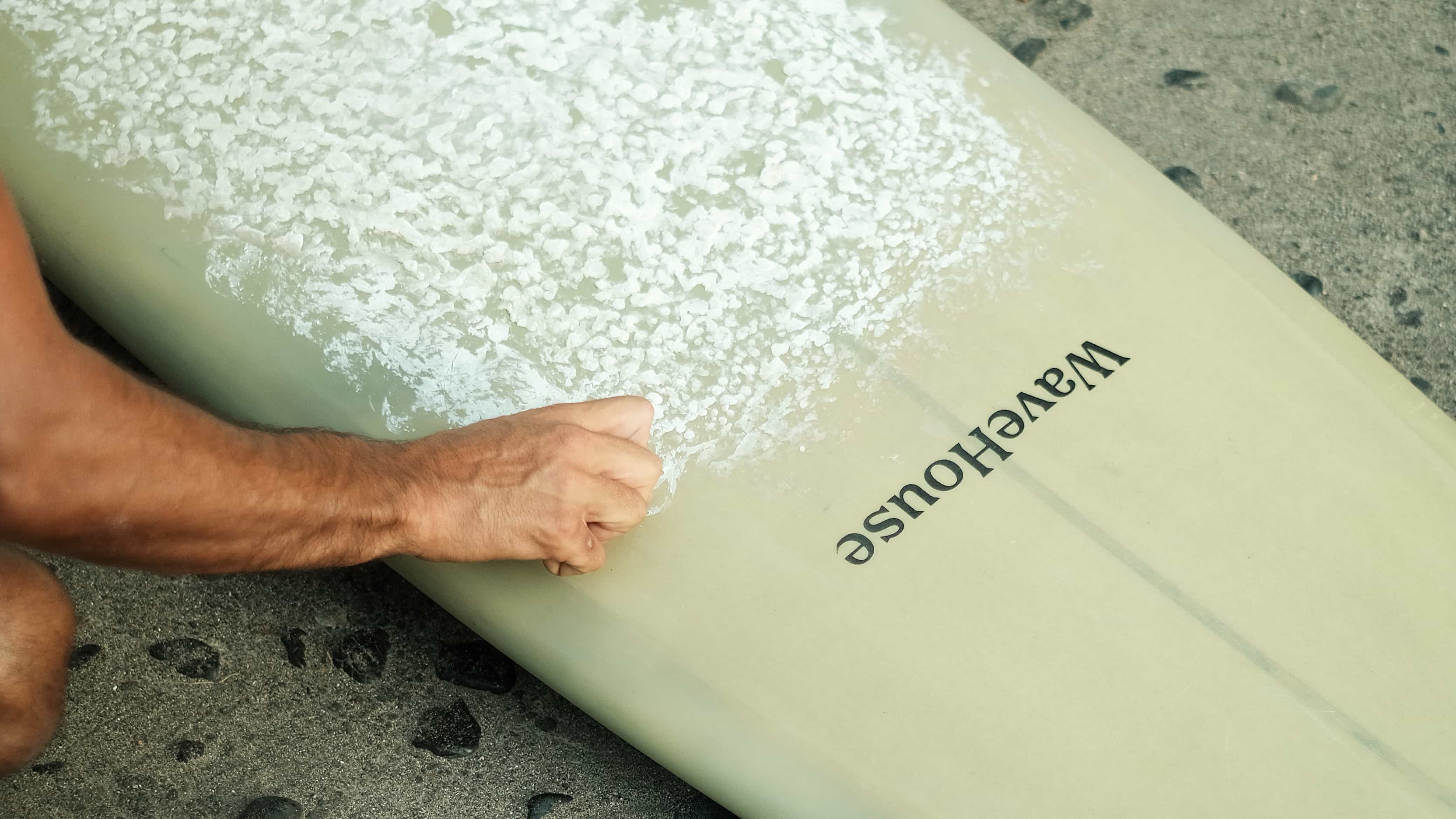
A base coat is a harder wax applied directly to a clean deck. It creates a foundation that the softer top coat can grip onto, think of it as the primer before paint. Apply it in small circular motions, covering the areas where your feet, knees, and chest will sit. You don't need much, a thin, even layer is enough. You only need to do this once, unless you strip your board back to bare deck.
Step 3: Apply the Top Coat
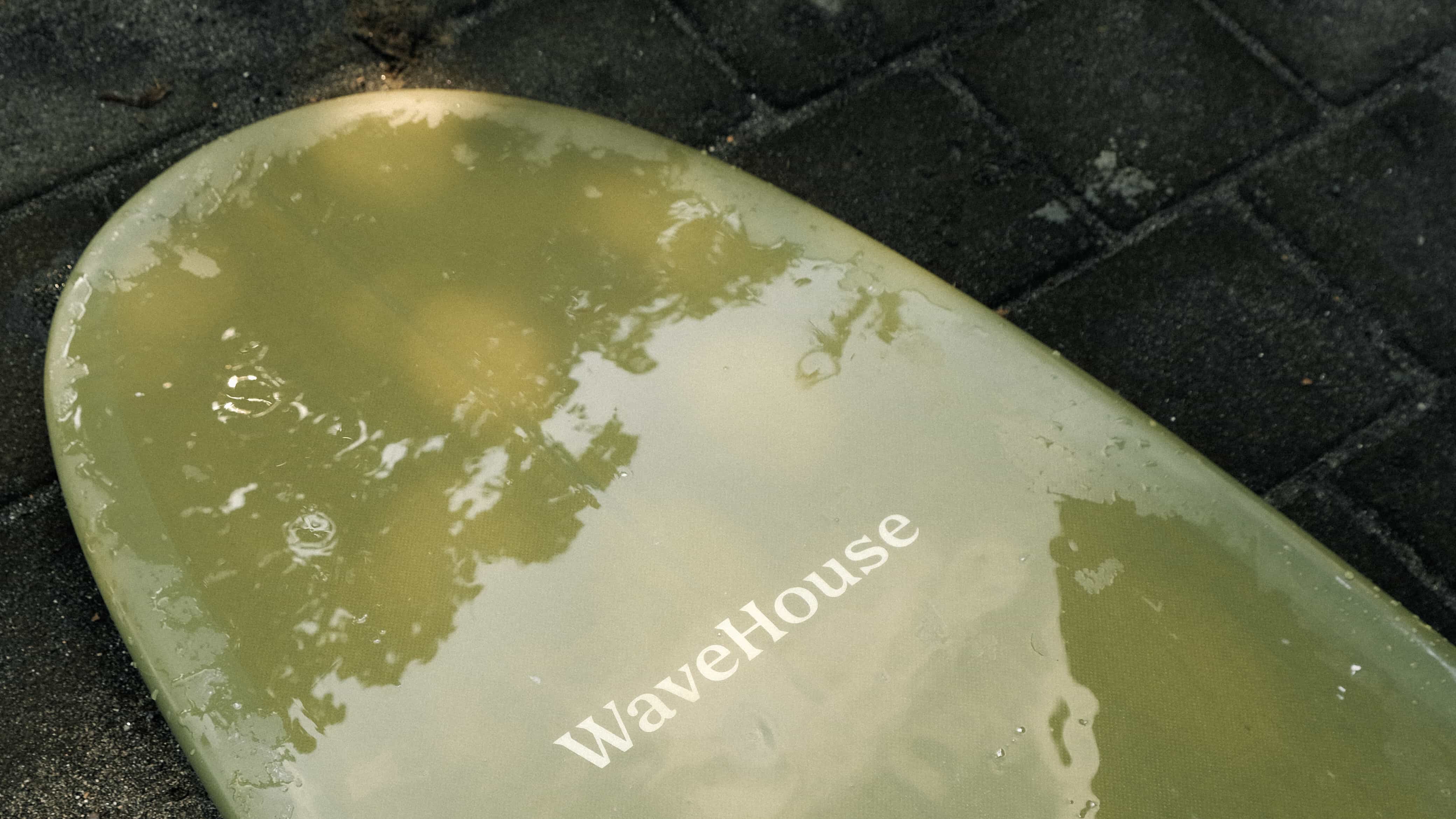
This is the wax you'll be reapplying regularly. Using your tropical (or temperature-appropriate) wax, work it onto the board in small circular motions, building up little bumps of texture as you go. Focus on:
- Where your front and back feet land during your pop-up
- The chest and rail area, no matter if you paddle on a longboard, shortboard, or soft-top
- The rails themselves, especially if you're learning to turtle roll
Don't rub it smooth, you want texture, not a thin film. Those little bumps are what your feet grip onto.
How Often Should You Wax Your Board?
This depends on how often you surf and the conditions, but as a general guide:
- Daily surfers in warm water: a quick top-up every session, or every other session
- Occasional surfers: rewax every few sessions, or whenever the wax starts feeling smooth and slippery instead of grippy
- Rental or camp boards: these usually get a quick wax check before every session by the crew, but it never hurts to add a bit more yourself
A simple test: run your hand across the deck. If it feels smooth, slick, or has sand baked into a hard shiny layer, it's time for a fresh coat. If it's still got texture and tackiness, you're good to go.
Bonus Tips
- Store your board out of direct sunlight when not in use, heat melts wax (and can damage your board).
- If your wax gets gunky with sand and old wax buildup, use a wax comb or the edge of a credit card to scrape it off before reapplying.
- Carrying travel-size wax in your board bag is smart, especially if a ding repair isn't the only small fix you need on the road.
Small Ritual, Big Difference
It takes less than five minutes, but a properly waxed board can be the difference between a frustrating session of sliding around and a session where you actually catch waves. If you're still working on the basics, our complete guide to surfing for beginners covers everything else you need to know before you paddle out.
And if you'd rather skip the gear-shopping altogether for your first few sessions, our Surf Camp in Canggu include freshly waxed boards, so all you have to think about is standing up.