

If you've ever paddled out, caught nothing for twenty minutes, and then felt like you'd run a marathon, you already know: surfing is a workout. But it's a very specific kind of workout, and "I'll just go to the gym more" doesn't always translate the way you'd hope. This guide breaks down exactly which movements matter most for surfers, and gives you a simple routine you can do at home, no fancy equipment required.
The Three Things Surf Fitness Actually Needs
1. Paddle Power (Upper Body & Back Endurance)
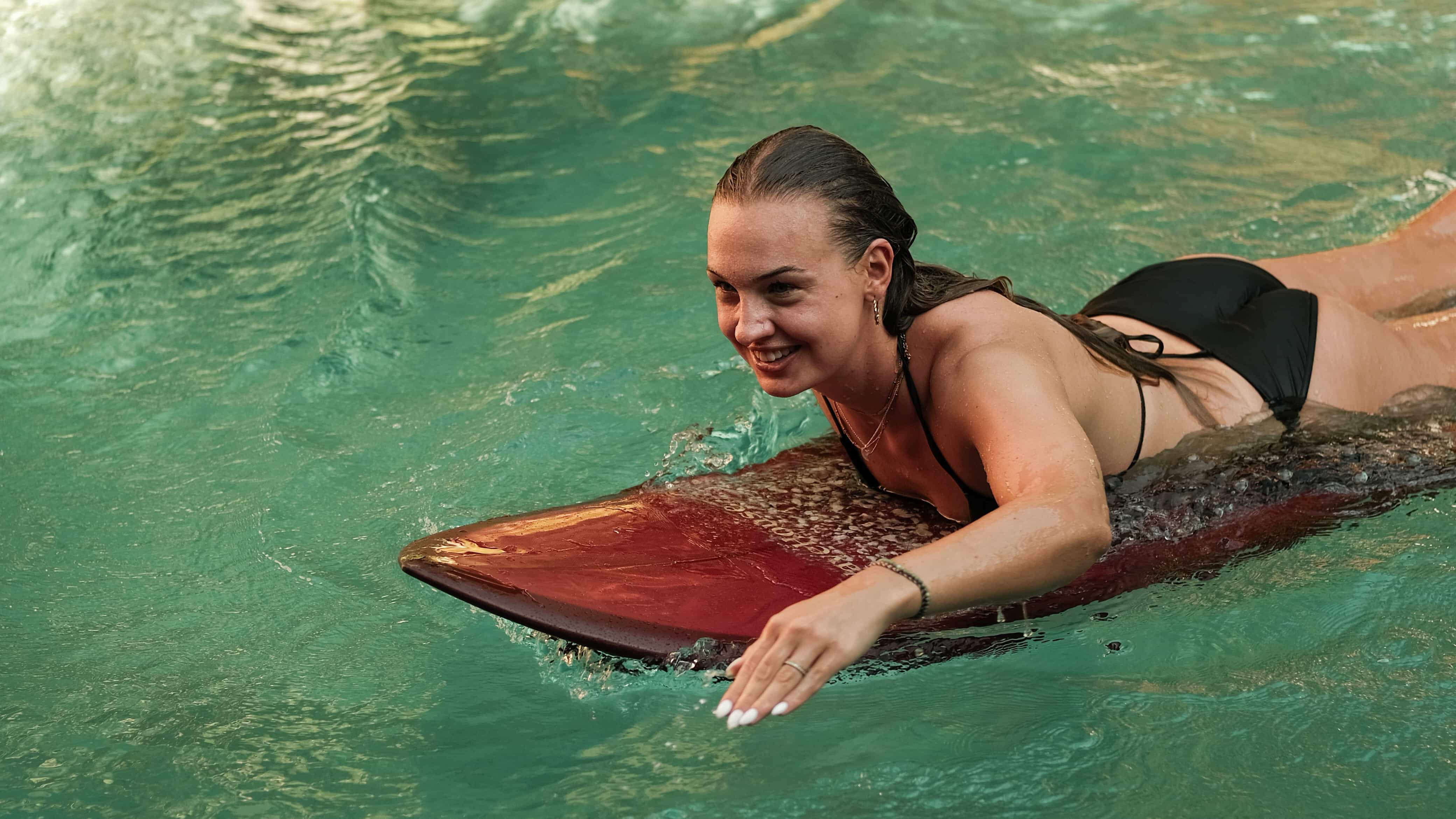
Paddling is the most time-consuming part of any session, and it's almost entirely upper body: lats, shoulders, upper back and core working together in a repetitive pulling motion. The catch is that it's also endurance-based, you're not doing one big effort, you're doing hundreds of small ones, often against resistance from currents and whitewater.
2. Pop-Up Strength (Explosive Power)
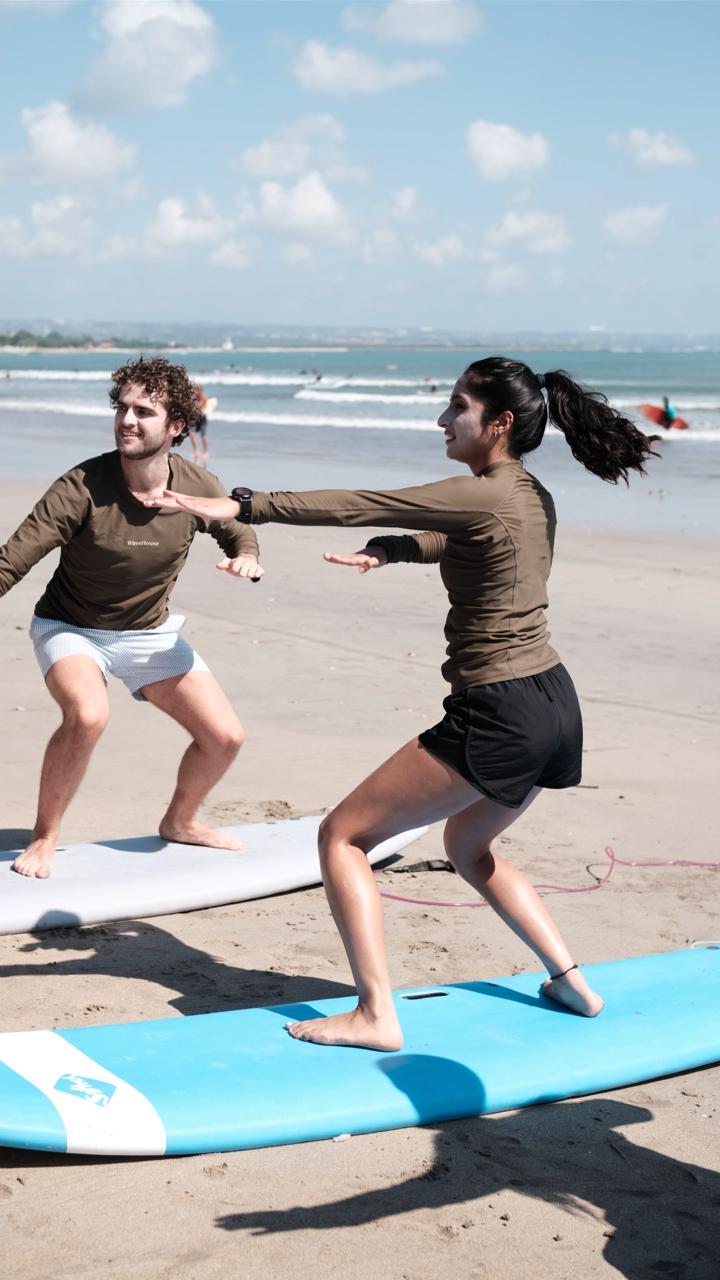
The pop-up is a short, explosive, full-body movement: hands push, hips drive forward, and you go from lying down to a stable stance in under a second. This relies on upper body pressing strength, core control, and hip flexor power, completely different from the slow-burn of paddling.
3. Mobility & Balance (The Glue That Holds It Together)
Strength without mobility is like a powerful engine with rusted hinges, the power is there, but it can't move through the range surfing demands. Shoulder mobility for paddling, hip mobility for turns, and ankle/core stability for balance are what let your strength actually show up in the water.
The Home Surf Workout
Here's a simple routine that covers all three areas. No gym required, just floor space and, ideally, a resistance band or a couple of light dumbbells if you have them.
Warm-Up (5 minutes)
- Arm circles, forward and backward, 30 seconds each direction
- Cat-cow stretches, 10 reps, to wake up the spine
- Bodyweight squats, 15 reps, to get the hips moving
Paddle Power Block
- Prone "Superman" pulls: Lie face down, arms extended overhead, and pull your arms back toward your hips in a swimming motion, like you're paddling. 3 sets of 20-30 reps. This directly mimics the paddling motion and builds the exact endurance you need.
- Resistance band rows: Anchor a band to something sturdy (or use the classic "pull the band apart" version), and perform rowing motions for 3 sets of 15 reps. Targets the upper back muscles that fatigue fastest when paddling.
- Plank to downward dog: From a plank, push your hips up and back into downward dog, then return to plank. 3 sets of 12 reps. Builds shoulder endurance while also working mobility.
Pop-Up Power Block
- Burpee-to-surf-stance: Instead of jumping your feet together at the top of a burpee, jump into your surf stance (one foot forward, one back, knees bent). 3 sets of 8-10 reps. This is the single most surf-specific exercise you can do.
- Explosive push-ups: Standard push-ups, but push up explosively so your hands briefly leave the floor (or as explosively as you can manage). 3 sets of 8 reps. Builds the pressing power behind the pop-up.
- Jump squats: 3 sets of 12 reps. Builds the hip-drive that powers your pop-up forward.
Mobility & Core Block
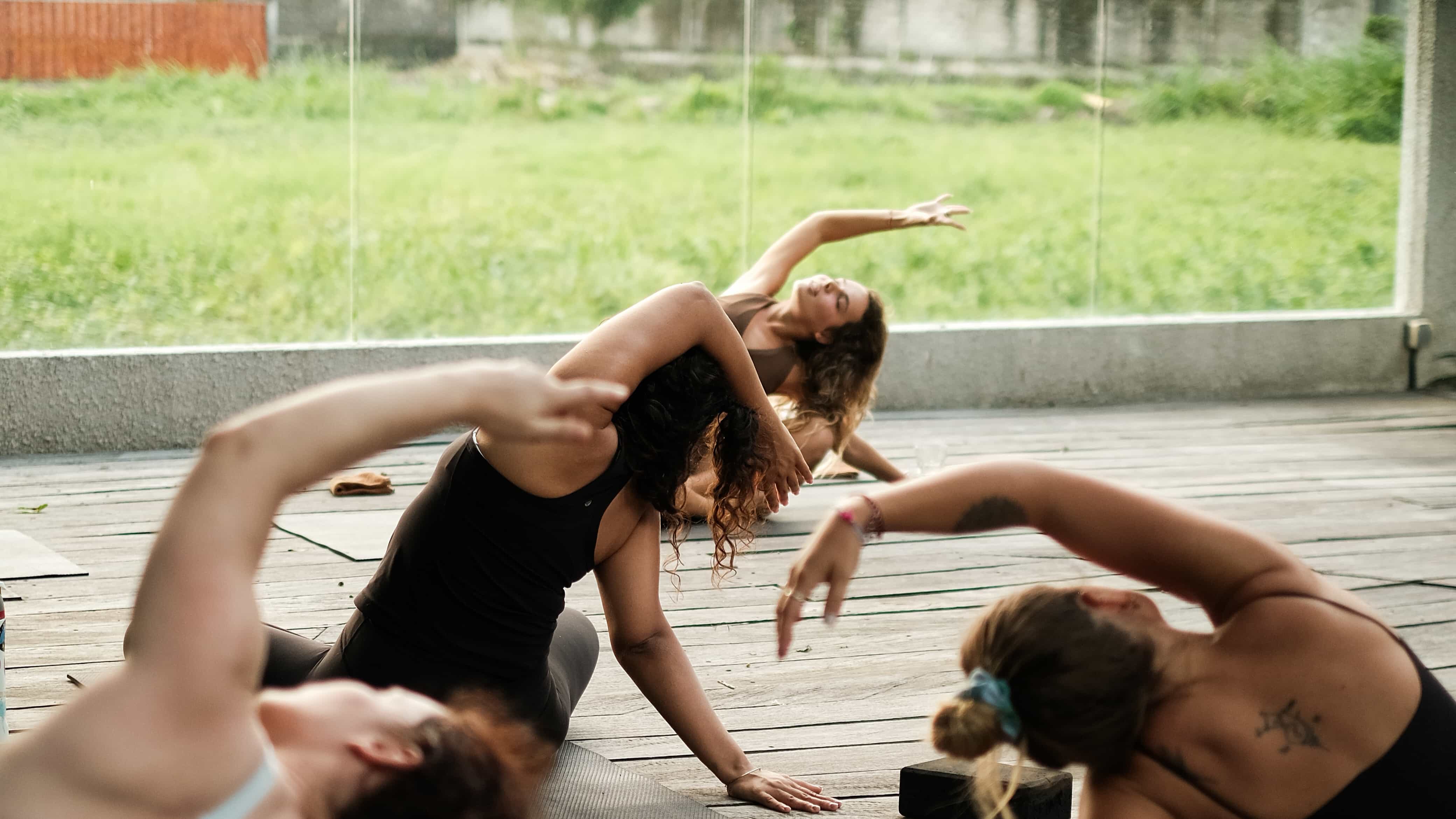
- World's greatest stretch: A lunge with a rotational reach, 8 reps per side. Opens hips, spine and shoulders all at once.
- Side plank with rotation: 3 sets of 10 reps per side. Builds the rotational core strength used in turns.
- Single-leg balance (eyes closed for an extra challenge): 3 x 30 seconds per leg. Directly trains the stabiliser muscles you use to stay on your board.
How Often Should You Do This?
2-3 times per week is plenty for most surfers, especially if you're also surfing regularly. The goal isn't to exhaust yourself before you paddle out, it's to build the underlying capacity so your sessions feel less like survival and more like progress. On days you also surf, try to leave a few hours between your workout and your session, or do your workout afterward as a "finisher".
Mobility Deserves Its Own Spotlight
The routine above covers the basics, but mobility and breath work, particularly through yoga, deserve more depth than a single section can give them. If you've ever felt "strong but stiff" in the water, unable to get low enough in your stance or rotate enough for a turn, that's a mobility gap, not a strength gap. Our companion guide to yoga for surfers covers the poses and routine that fill exactly that gap.
Fuel and Recover Like It Matters
None of this works without recovery. Muscles get stronger during rest, not during the workout itself, and what you eat before and after both training and surfing has a direct impact on how quickly you recover and how much energy you have for your next session. Our guide on surfer's nutrition covers exactly what to eat and when.
Train at Home, Progress in the Water
A consistent home routine like this will make a real difference to how your sessions feel, more paddle power, a snappier pop-up, and fewer "why does everything hurt" mornings. But the fastest progress still happens with waves under your feet and someone experienced watching your technique. If you're building this routine ahead of a trip, or looking to combine training with daily coaching, Surf Camp in Canggu is built around exactly that combination: structured training, daily surf sessions, and the recovery rhythm to tie it all together.