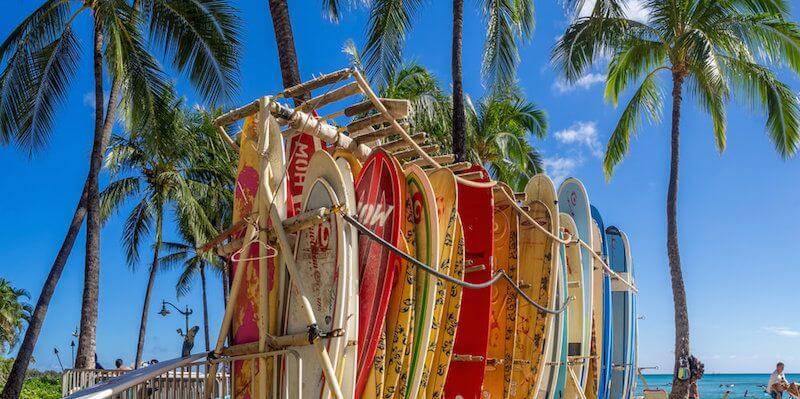
A large, stable soft-top is usually the best first surfboard. Longboards, funboards, fish, shortboards and guns suit different skills and conditions. Length alone does not decide the right board: shape, volume, your body size and the waves matter too. Wondering is surfing hard? Choosing a suitable board makes the basics less frustrating.
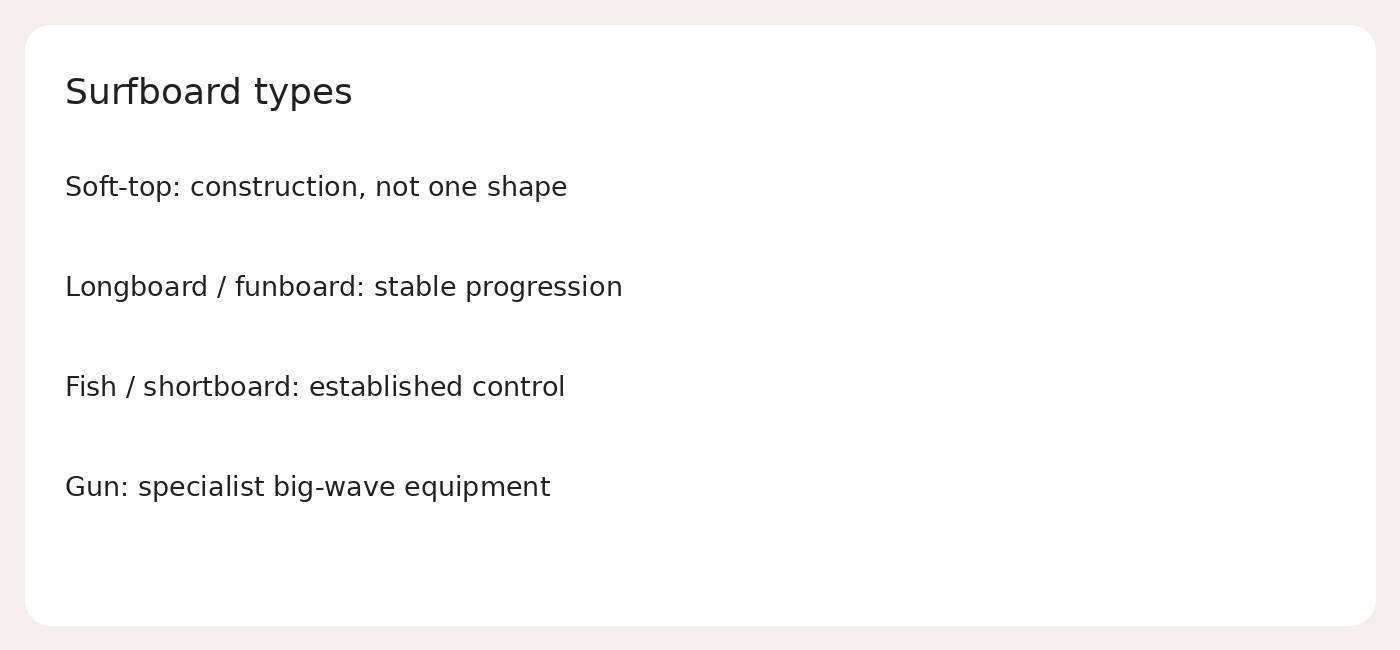
Surfboard types at a glance
These approximate length ranges come from our original guide and describe common examples, not fixed categories or a sizing prescription. Soft-top describes construction, so it can overlap with other types. Wave suitability depends on the individual design and rider, not just the label.
Soft-top: the best first board

A soft-top has a soft foam deck. In a large, wide shape, it offers a stable platform for learning to paddle and stand up. The softer deck does not make collisions harmless, so board control and spacing still matter.
WaveHouse states that beginners on its Canggu programme use a soft-top longboard. Start in conditions your coach chooses and focus on balance before chasing a smaller board. Our beginner surf tips explain what to practise first.
Longboard
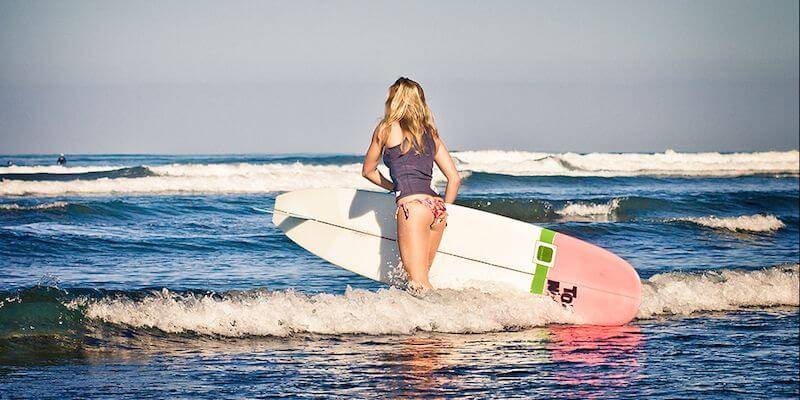
A longboard has a long outline and usually a rounded nose. Its size helps with paddling and catching smaller waves. Longboarding is a style in its own right, not just a stage before using a shortboard.
Experienced longboarders may cross-step or noseride. A learner should first work on controlling the board and riding comfortably; a longboard still needs space and sound judgement.
Funboard (mini-mal)

A funboard sits between a longboard and a shortboard. A mini-mal is a longboard-inspired shape within this broad group. It keeps useful paddling support while being more compact than a full longboard.
It can suit a progressing beginner, but do not move down in size just because the name sounds easy. Choose it when you can catch waves and control your board consistently, with advice from a coach.
Fish
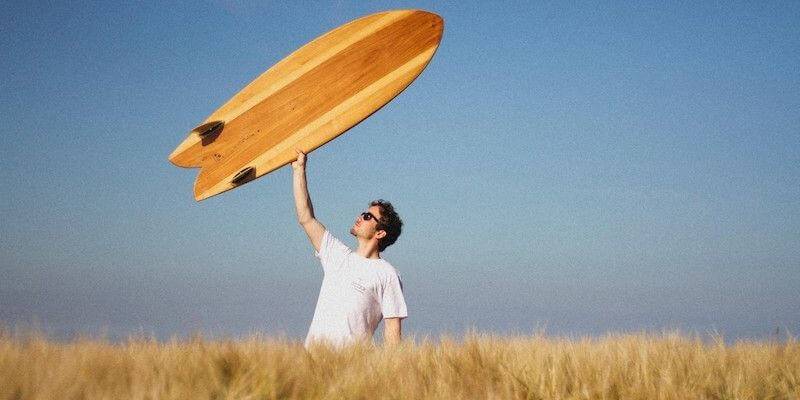
A traditional fish is short and relatively wide, with a swallow tail and commonly two fins. Modern variations exist. Its fuller shape can suit smaller, softer waves for a surfer who already has good board control.
A fish is not automatically a beginner board. A short length can make balancing and learning the pop-up harder than on a suitable long soft-top.
Shortboard
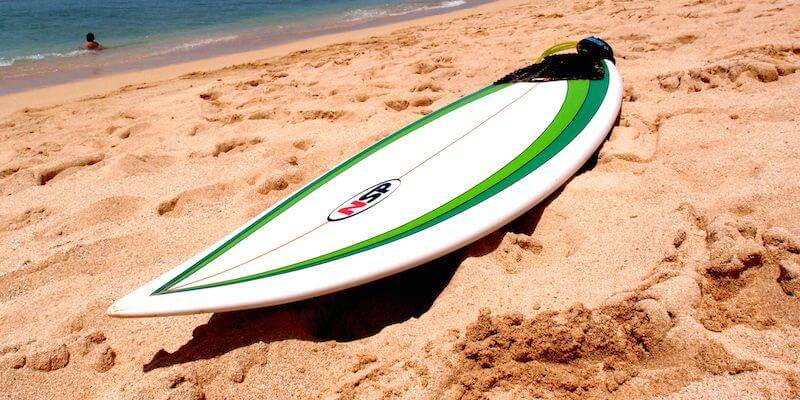
A performance shortboard is typically shorter and narrower than a longboard, often with a pointed nose. Its shape supports responsive turns, but usually demands stronger paddling, accurate positioning and quicker takeoffs.
It is generally a poor first-lesson choice. Match the design to both your ability and the conditions rather than copying the board a professional rides.
Gun

A gun is a long, relatively narrow board with a pointed nose, built for experienced surfers in big waves. Its shape aims to combine paddle power with control in powerful surf. Width, thickness and fin layouts vary between models.
A gun is not a beginner alternative to a longboard, even when their lengths overlap. Big-wave equipment belongs with specialist experience and preparation.
How to choose your first board
- Start with your level. If you are learning to paddle and stand, choose stability over sharp turns. Use surfing levels explained to describe your experience to a coach.
- Consider your body size and paddling ability. Ask for a length, width and volume suited to you. Volume is measured in litres, but one number does not capture the shape or how it will feel. There is no universal beginner volume.
- Match the conditions. Learn in manageable waves selected with local guidance. A board that suits one beach or day may not suit another.
- Try before buying. Spend time on a suitable rental or lesson board and ask for feedback before downsizing.
Check the rest of your setup with our surf equipment list. Board choice is only one part of getting ready.
Which board to rent in Bali
For a first session, ask for a stable, appropriately sized soft-top rather than the shortest board on the rack. WaveHouse says its Canggu beginner programme uses soft-top longboards; independent rental shops may have different stock. Ask a coach which board suits your weight, experience and the conditions that day.
Before accepting a rental, check the board, fins and leash, and clarify damage terms. Compare surf rental prices and learn about surfing in Canggu before choosing where to practise. Do not treat a rental board as a substitute for local guidance.
Surfboard FAQ
What surfboard should a beginner use?
A beginner will usually find a large, stable soft-top easier for learning to paddle, balance and stand up. The right size depends on body weight, experience and the waves. Ask a coach to choose it rather than copying someone else. WaveHouse states that its Canggu beginners use soft-top longboards.
What is a funboard?
A funboard is a broad category of boards between longboards and shortboards. It keeps more size and paddling support than a typical performance shortboard while feeling more compact than a longboard. A mini-mal is a longboard-inspired example. It can suit a progressing beginner when its size and shape match their ability.
What is the difference between a longboard and a funboard?
A longboard is generally longer and often offers more paddling support and stability. A funboard is shorter and can be easier to turn, but may feel less forgiving when learning. Both categories include different designs. Choose by your control, body size and usual waves, rather than length or the label alone.
What is a fish surfboard?
A traditional fish is a short, wide surfboard with a swallow tail and commonly a twin-fin setup. Its fuller outline can help an experienced surfer enjoy smaller, softer waves. Modern fish-inspired boards vary in shape and fins. Despite the extra width, a short fish is not automatically suitable for a complete beginner.
Ready to try one?
Start with a board that helps you learn, not one you have to fight. Join surf lessons in Canggu and ask your coach to match the board to your level and the conditions.
Details
Author