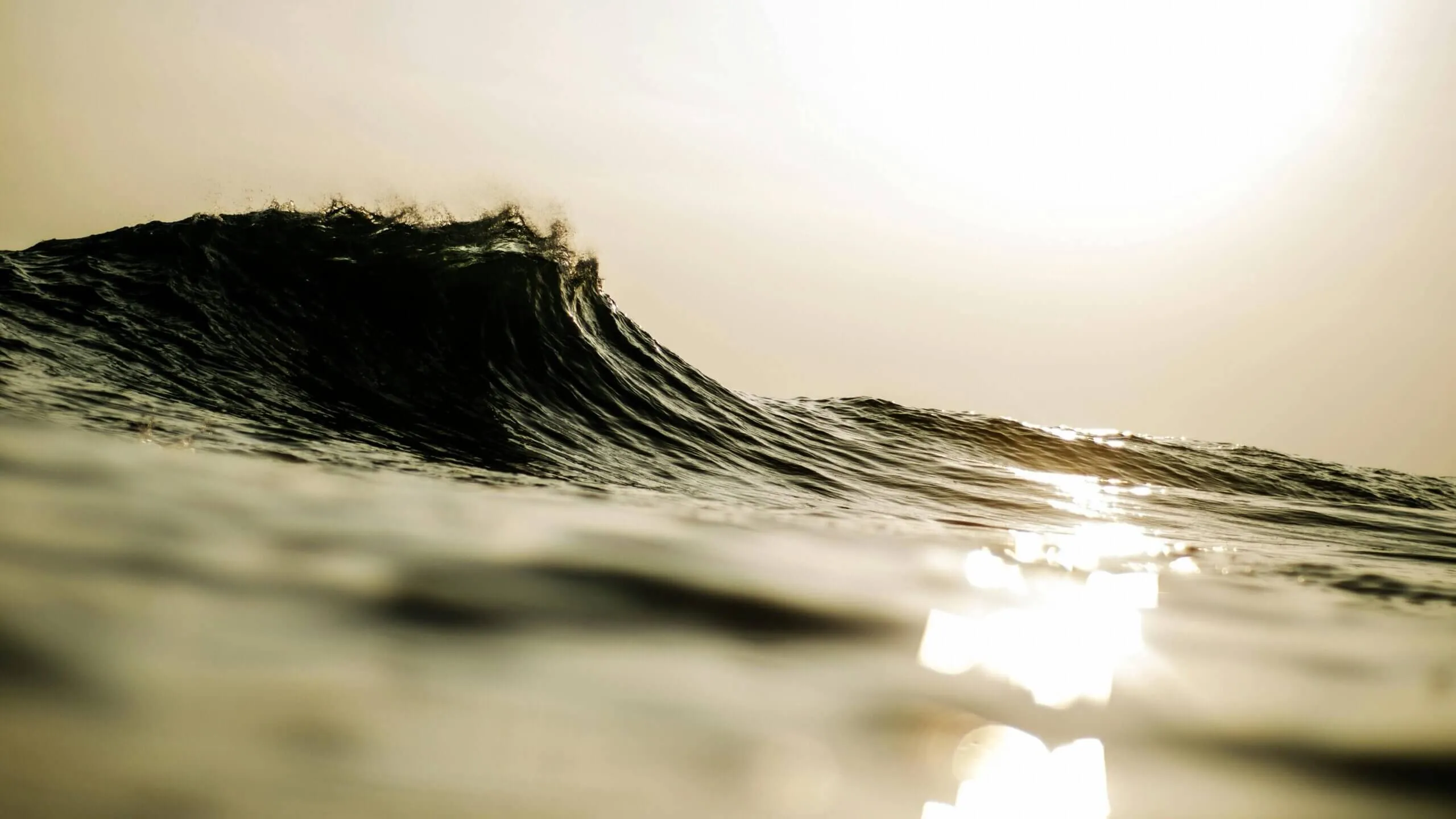
Swell direction is where the swell comes from, not where it is going. Period is the time between wave crests, and height describes wave size offshore. Read all three together, then check wind, tide and the break. The same offshore swell can produce very different surf at two beaches.
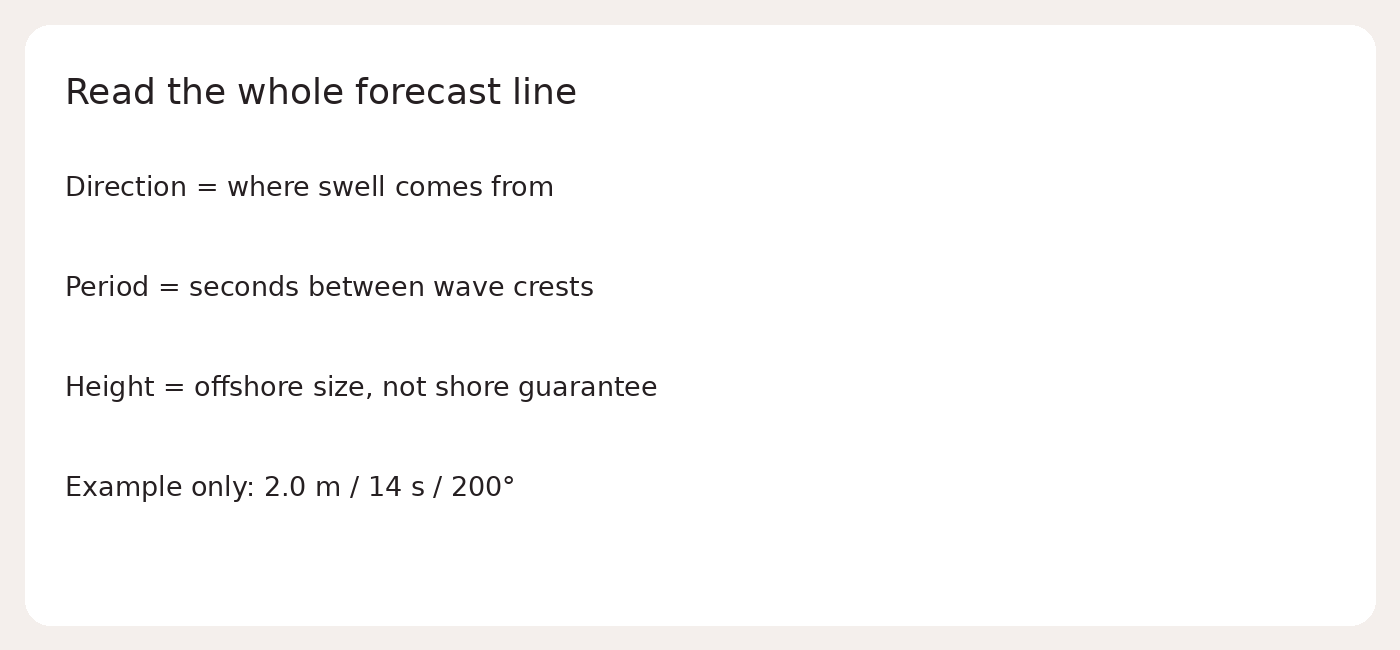
The 30-second version
- Direction: where the swell comes from.
- Period: seconds between crests at a fixed point.
- Height: wave size in the forecast, not a guarantee of the breaking wave at shore.
What is swell direction?
A 200-degree swell comes from just west of south, roughly south-southwest. Marine forecasts describe the incoming direction. The US National Weather Service explains wave direction, height and period.
Compass reference
These compass points divide the circle evenly. The incoming direction is not a recommendation for every break facing that coast.
Swell direction, period and size
Period is measured in seconds between successive crests passing a fixed point. NWS explains that period relates to wave speed, depth of influence and energy, which can affect breaking-wave size. Height is an offshore forecast measure, not a promise that every wave will be that height.
Why direction changes which spot works
Swell windows
A swell window is the range of incoming directions that can reach a break. Headlands, islands, reefs and the coast shape can block or reshape that energy. One beach can be exposed while another is sheltered.
How waves bend
As waves meet shallower water, different parts slow at different rates and the wave direction can bend, called refraction. Local bathymetry matters. This is why a generic rule such as "all reef breaks need west swell" is misleading.
Swell direction at Bali surf spots
Source: WaveHouse Canggu surf spots. Read wet season planning for coast selection context.
How to read a swell forecast line
This is an invented teaching example, not today's forecast. It does not tell you the exact breaking-wave height or whether the spot is safe.
Swell vs wind vs tide
Swell can travel from distant weather systems. Local wind can change the surface and wave quality. Tide changes water level and reef coverage. Check the tide chart and spring and neap tides separately from the swell. Ask a coach to interpret the combination for your ability.
Sources and terms
Wave properties: NWS marine wave detail, checked 13 October 2026. Local spot examples: WaveHouse's current spot guide. For lineup language, use the surf slang glossary.
Frequently asked questions
What is swell direction in surfing?
It is the direction from which the swell arrives. For example, a 200-degree swell comes from just west of south, roughly south-southwest. It is not the direction the swell is traveling toward. Combine direction with period, height, wind, tide and the break's shape to judge the session.
What is swell period?
Swell period is the time in seconds between successive wave crests passing a fixed point. The National Weather Service explains that period relates to speed, depth of influence and wave energy. Read it alongside height and direction; it does not by itself tell you the exact breaking-wave size or safety.
What is the difference between swell and wind direction?
Swell direction describes where incoming wave energy comes from, often generated far away. Wind direction describes where the wind comes from and can affect local surface conditions. A spot can have incoming swell but poor local wind. Check both, along with tide and the actual beach conditions.
Which swell direction is best for Bali?
There is no single best direction for every Bali break. WaveHouse's guide describes south swell for Echo Beach and south to southwest for Pererenan and Cemagi. Other spots have their own exposure and hazards. Ask a local coach about the specific swell window, conditions and your level rather than rely on an island-wide rule.
Plan your next session
Explore WaveHouse packages or surf lessons in Canggu. Ask the team to match your level and dates with the right option.
Updated 13 October 2026.
Details
Author