
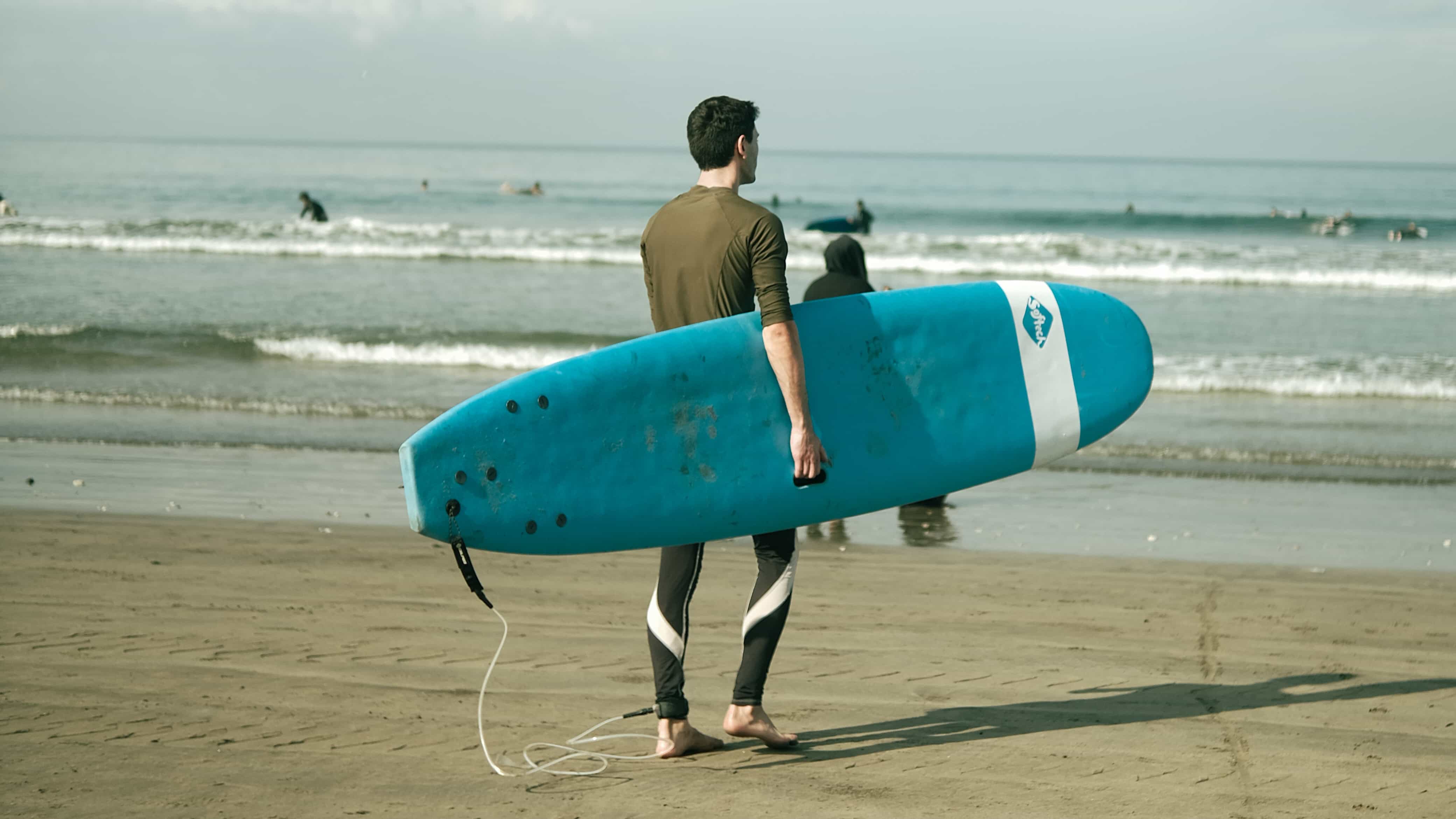
Every surfer, from total beginner to seasoned pro, started in exactly the same place: lying on a board, paddling in circles, and wondering if any of this would ever feel natural. It does. This Wave House’s guide walks you through everything you need to know to go from "never touched a surfboard" to "caught my first wave", step by step, with no fluff and no assumptions that you already know what a "lineup" is.
Think of this as your home base. Wherever you are in your surf journey, this guide will point you to the right next step, and to the people who can actually get you in the water and help you stand up for the first time.
Step 1: Get the Right Gear
You don't need to buy anything to start surfing, in fact, we'd recommend you don't. Rental and lesson packages almost always include everything you need, and the gear matters more than most beginners realise.
The Board
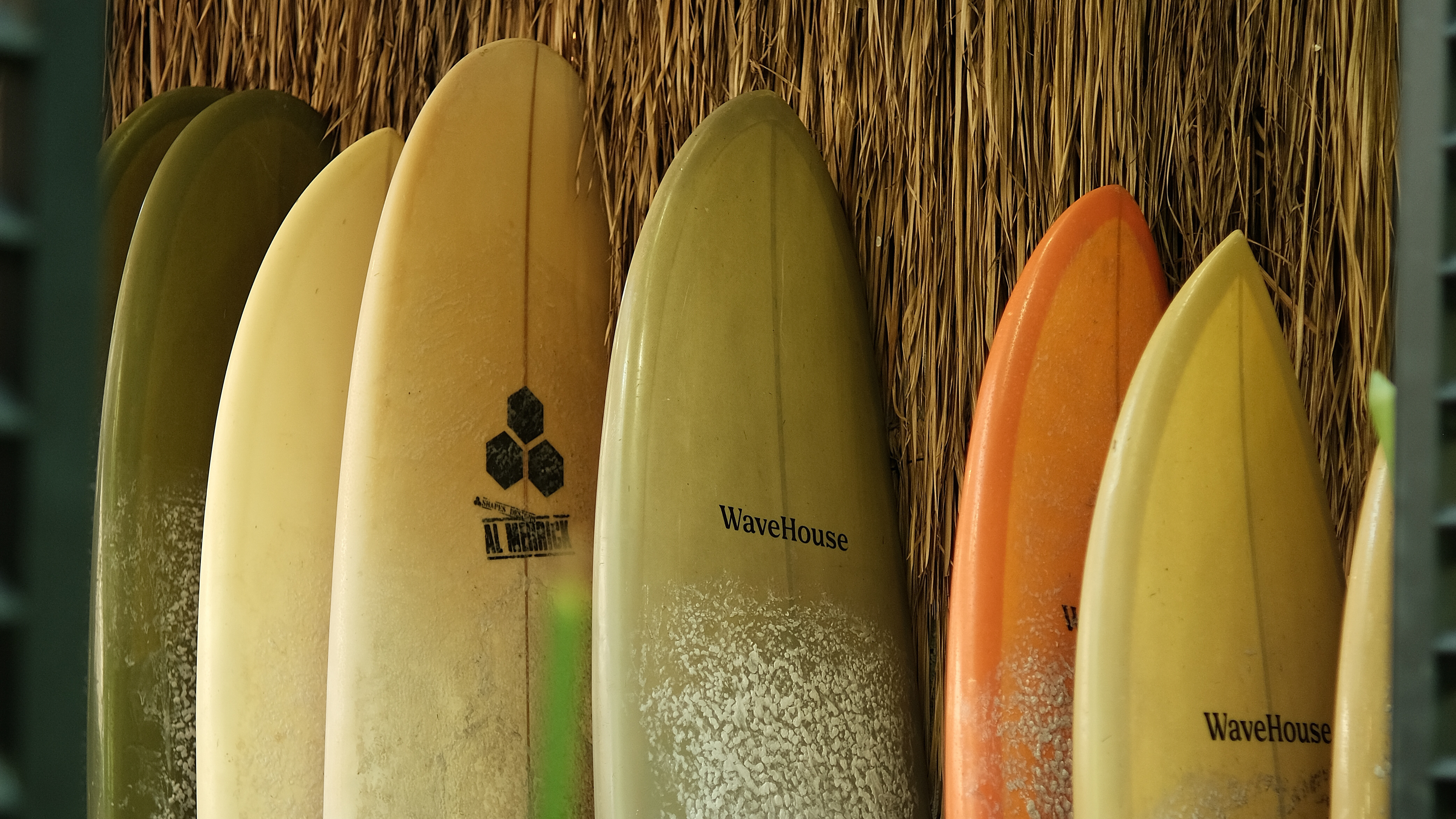
Your first board should be big, soft, and stable. A foam "soft-top" longboard, typically 8 to 9 feet, is the standard beginner board for a reason: more volume means more buoyancy, which means easier paddling and a much more forgiving pop-up. Skip the sleek shortboards you see pros riding, they're built for speed and turning, not for learning. For a deeper look at how board choice changes as you progress, see our guide to finding the perfect surfboard for your body type and skill level.
Wax
Wax is what stops your feet sliding off the board the moment you try to stand up. It's cheap, it's simple, and it makes a huge difference. We've put together a full walkthrough on how to wax a surfboard (and how often), but the short version is: wax is matched to water temperature, so grab a tropical-temperature wax if you're learning somewhere warm like Bali, or a cold-water wax if you're hitting cooler breaks, then apply it in small circles over the areas where your feet and chest will sit. That's all you need to get started.
A Leash and Rash Guard
A leash keeps your board attached to your ankle (so it doesn't become a hazard to other surfers after a wipeout), and a rash guard protects your skin from both sun and wax rash. Both are standard inclusions with any beginner lesson.
Step 2: Practice on Land First
Before you even touch the water, your instructor will likely have you practice the single most important movement in surfing: the pop-up. This is the transition from lying flat on your board to standing in your surf stance, and it's a movement your body needs to learn through repetition.
We've written a full breakdown of mastering the pop-up, but the core idea is simple: push up through your hands (not your knees), bring your back foot forward in one motion, and land low and balanced with your eyes up. Practising this on the sand, again and again, until it feels automatic will save you an enormous amount of frustration in the water.
Step 3: Learn to Paddle (Properly)
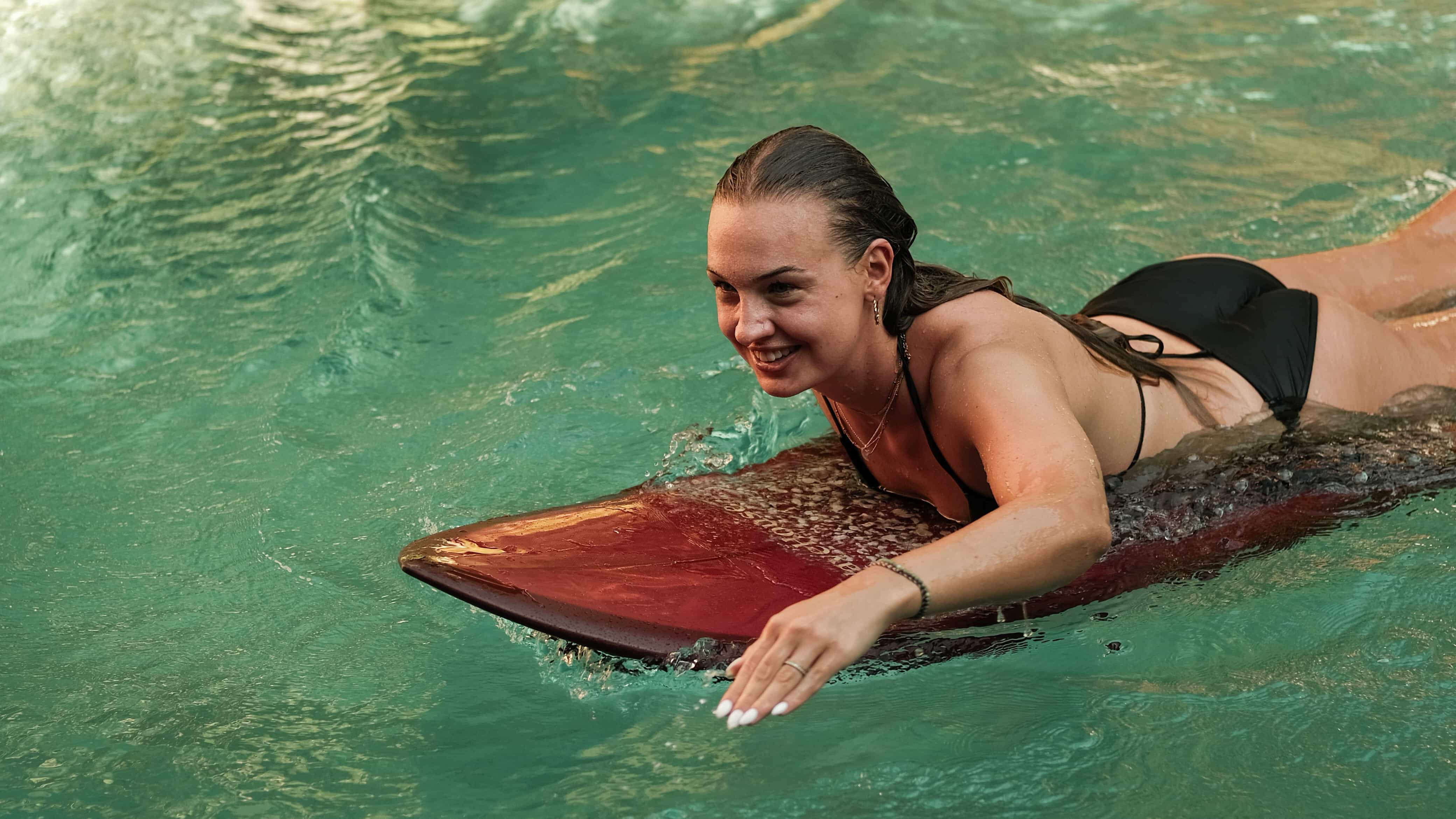
Paddling looks simple, lie down, move your arms, but most beginners either splash frantically or paddle with their face buried in the board. Good paddling technique means:
- Lying centered on the board, with your weight balanced so the nose doesn't dig into the water
- Keeping your chest slightly lifted
- Using long, smooth strokes rather than short, panicked ones
- Keeping your eyes up and forward, not down at your hands
Good paddling isn't just about catching waves, it's also about getting out past the breaking waves in the first place, which brings us to the next step.
Step 4: Get Past the Whitewater
Between you and the open water lies a wall of broken, foamy waves, often the most exhausting and intimidating part of a beginner's first session. Depending on your board, you'll either push the nose of your board under the wave (a duck dive, mostly for shortboards) or flip your board upside down and hold on while the wave rolls over you (a turtle roll, the go-to for longboards and foam boards). Our guide on duck diving vs turtle rolling breaks down exactly when to use each.
Step 5: Read the Waves
This is where surfing starts to feel less like a workout and more like a conversation with the ocean. Waves come in sets (groups), with calmer lulls in between. Learning to recognise which waves are worth paddling for, and which ones will close out and dump you, is a skill that develops with time, but a few basics go a long way:
- A wave that rises smoothly and evenly is usually rideable
- A wave that suddenly jacks up steep will likely break too fast
- Watching more experienced surfers in the lineup tells you a lot about where to sit
For a full breakdown, including how to spot the best wave in a set, see how to read waves like a pro.
Step 6: Catch Your First Wave
Here's the moment everything has been building toward. When a wave approaches:
- Turn your board to face the shore
- Start paddling with purpose as the wave reaches you
- Feel the wave pick up your board and give you a push
- Pop up, using the technique you practised on land
- Stay low, look ahead, and ride it in
Your first "wave" will likely be whitewater, the soft, broken water after a wave has already crashed, and that's exactly how it should be. Whitewater is forgiving, predictable, and the perfect training ground before you move on to unbroken (green) waves.
Step 7: Learn the Unwritten Rules
Surfing has its own etiquette, and learning it early will make you welcome in any lineup, anywhere in the world. The golden rule: the surfer closest to the breaking part of the wave (the "peak") has priority. Don't paddle in front of someone already riding a wave ("dropping in"), be patient in the lineup, and always hold onto your board after a wipeout so it doesn't become a hazard for others.
How Long Does All This Take?
Most beginners stand up on whitewater within their very first session. From there, progress depends heavily on consistency, conditions, and feedback. We've laid out a full realistic timeline, from day one to three months in, in our guide on how long it takes to learn surfing. If you're nervous about the learning curve itself, our honest take on whether surfing is actually hard might put your mind at ease.
Beginner-Friendly Surf Hacks
Beyond the core steps above, there are dozens of small tricks that make a beginner's life easier, from how to handle your leash to staying relaxed when a wave catches you off guard. We've collected our favourites in 10 surf hacks every beginner wishes they knew before wiping out.
Where to Take It From Here
Reading about surfing can only take you so far. At some point, you have to paddle out. If you're dreaming of bigger goals down the line, our look at the biggest waves in the world is a fun reminder of just how far this sport can take you, but every single one of those surfers started exactly where you are now.
The single biggest factor in how quickly, and how safely, you progress is guidance. Having an experienced instructor put you on the right wave, at the right moment, with the right cue, turns "trial and error" into real progress. That's exactly what our Surf Camp in Canggu are built for: beginner-friendly waves, expert coaches (see our Surf Lessons in Canggu), and daily video analysis so you can actually see yourself improve, session by session.